
A full week in Tokyo is enough to enjoy its famous neighborhoods without spending every hour on the train. This seven-day plan groups nearby attractions together, includes realistic breathing room and explains how to build a travel budget without relying on imaginary flight deals.
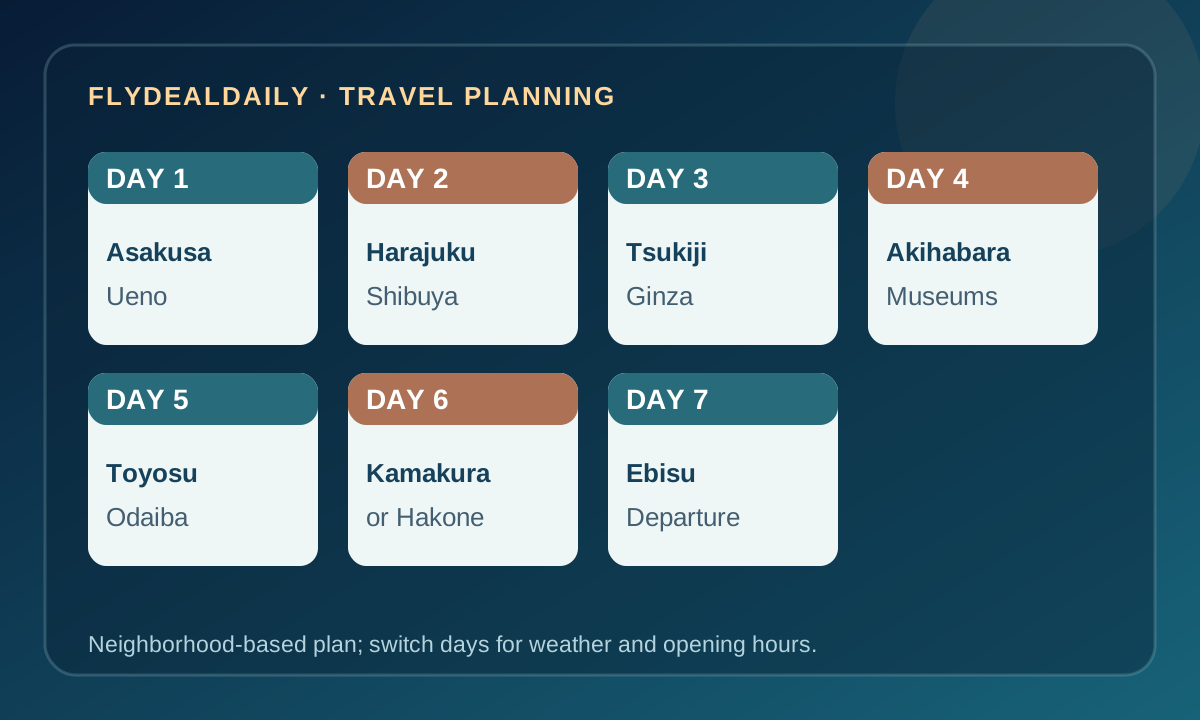
Seven days at a glance: Day 1 Asakusa and Ueno; Day 2 Meiji Jingu, Harajuku and Shibuya; Day 3 Tsukiji, Hama-rikyu and Ginza; Day 4 Akihabara and museums; Day 5 Toyosu and Odaiba; Day 6 Kamakura or Hakone day trip; Day 7 a slower local neighborhood and departure. Switch days to accommodate weather, closing days and reservation availability.
Before arrival: the three bookings that matter most
Book a hotel near a useful rail station, not simply the cheapest neighborhood on the map. Many first-time visitors are happy in Shinjuku for transport and late dining, Ueno/Asakusa for the old-city atmosphere, or Tokyo Station/Ginza for central access and higher-end restaurants. See our Tokyo accommodation area comparison.
Next, confirm how you will travel from Haneda or Narita. Neither “best” airport nor a single rail pass works for everybody; the correct choice depends on the hotel, arrival hour and luggage. Read Haneda vs Narita and transport pass options. A rechargeable Suica/PASMO-style IC card can make ordinary local trips simpler, but some rail services and tourist passes have different rules.
Finally, book time-sensitive tickets before the visit: popular observation decks, digital art exhibits and certain restaurants can require timed slots. Treat the schedule as a framework, not a guarantee that every attraction is open on your chosen day.
Day 1 — Asakusa, Senso-ji and Ueno
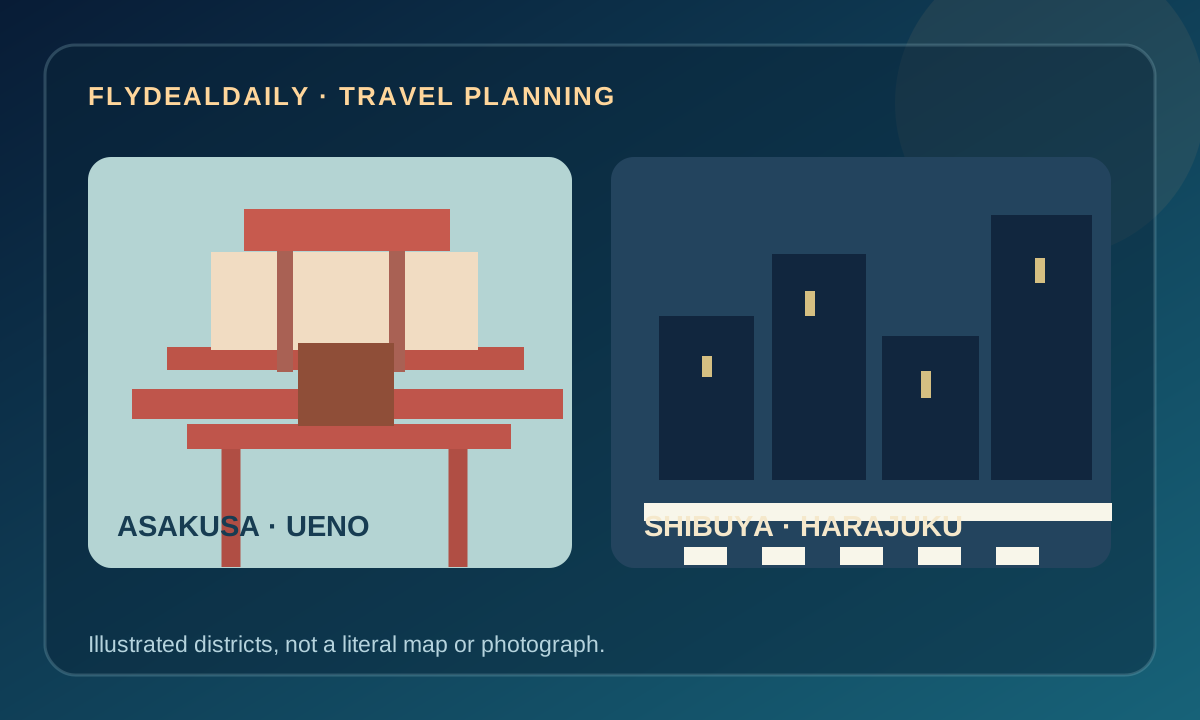
Morning: Explore Asakusa’s Kaminarimon Gate, Nakamise shopping street and Senso-ji Temple. Arriving early is often more comfortable than late morning. The main temple grounds are different from ticketed museums: check the opening conditions for each interior space you want to visit. Nearby Kappabashi is good for kitchenware and crafts.
Afternoon: Ride to Ueno for Ueno Park, Ameyoko shopping streets or a museum. Choose one museum rather than trying to cover all of them. Tokyo National Museum is a good fit for history and art, while Ueno’s broader museum district offers alternatives.
Evening: Relax near your hotel or return to Asakusa for an illuminated view of Senso-ji. If you prefer a skyline view, consider Tokyo Skytree separately and reserve a time if needed. Official GO TOKYO Asakusa planning page →
Day 2 — Meiji Jingu, Harajuku and Shibuya
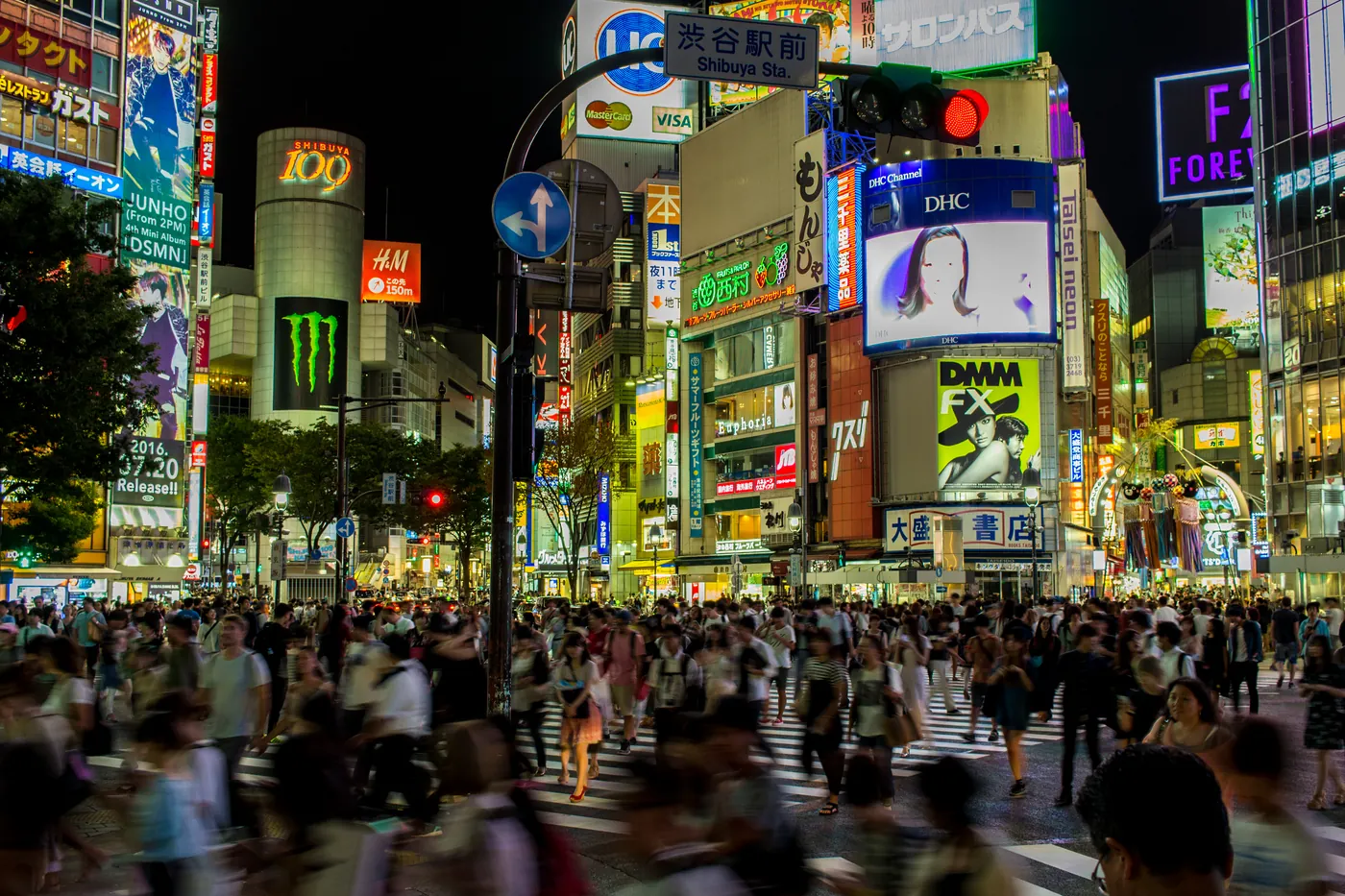
Morning: Start in Meiji Jingu’s forested grounds near Harajuku Station. It is a contrast to the loud retail streets nearby. Respect active worship areas and photography rules. Continue to Omotesando for architecture and a relaxed coffee stop.
Afternoon: Explore Harajuku’s side streets and then Shibuya Scramble Crossing. If fashion shopping is a priority, keep this afternoon open rather than stacking extra attractions.
Evening: Shibuya is an option for a rooftop observation deck if you have a reserved slot. Otherwise enjoy the district’s restaurants or travel to nearby Shinjuku for neon-lit streets. A sunset-view ticket is not a guaranteed clear-sky view; weather changes.
Day 3 — Tsukiji Outer Market, Hama-rikyu and Ginza
Morning: Start at Tsukiji Outer Market for food stalls and small shops. The wholesale auction market moved to Toyosu in 2018; Tsukiji’s outer market remains a separate visitor destination. Do not promise a working fish auction at Tsukiji.
Afternoon: Walk toward Hama-rikyu Gardens, then continue to Ginza for department-store food halls and shops. Check garden admission and any temporary closures before going. Official GO TOKYO Tsukiji guide →
Evening: Consider a prebooked Wagyu or Kobe beef dinner if your budget allows. The guide explains how to distinguish genuine Kobe certification from the A5 label, and why cattle-farm excursions belong on longer Japan itineraries rather than city evenings.
Day 4 — Akihabara, Ueno museums or Ryogoku
Spend the morning exploring Akihabara for electronics, games and pop culture. The stores vary greatly in pricing and tax-free rules, so compare items before buying.
Choose one afternoon theme. For art and history, return to the Ueno museum quarter. For a different slice of the city, explore Ryogoku’s sumo heritage, subject to the current tournament and venue calendar. A tournament ticket is not the same as a guaranteed training-stable visit; those require different arrangements.
In the evening, stay local for a low-key izakaya meal. Our Tokyo food neighborhoods guide helps you choose a restaurant area without crossing the city for every meal.
Day 5 — Toyosu, waterfront art and Odaiba
Reserve a timed art experience such as teamLab Planets in the Toyosu area if it fits your interests; its exhibit locations, hours and ticket conditions must be checked on the operator’s website. Nearby Toyosu is also where Tokyo’s main wholesale market operates.
After lunch, visit Odaiba for the bayfront walk, views of Rainbow Bridge and indoor attractions. The official Tokyo tourism guide describes Odaiba as a waterfront leisure area with multiple attractions, so avoid trying to fit everything into an afternoon. GO TOKYO Odaiba visitor guide →
Day 6 — Choose one day trip: Kamakura or Hakone
| Option | Best for | Planning trade-off |
|---|---|---|
| Kamakura | Temples, coastal town atmosphere and the Great Buddha | Popular sites can be crowded; check walk and transfer times |
| Hakone | Mountains, onsen and possible Fuji views | Weather can hide Fuji; transport loops and passes need advance research |
| Stay in Tokyo | Relaxed city day, shopping or museums | Good choice with children, jet lag, poor weather or short daylight |
A single day trip is enough for a first Tokyo week. Kamakura is generally simpler for historic walking; Hakone needs more route planning. Do not claim Mount Fuji will be visible on a particular date. Compare rail fares and any regional day pass against individual tickets.
Day 7 — Slow Tokyo, optional beer heritage and departure
If you have a full day, explore Shimokitazawa for independent shops or Ebisu for cafes and the YEBISU BREWERY TOKYO museum/taproom experience. Our Japanese beer and brewery tours guide explains official booking rules and why Suntory Musashino and Kirin Yokohama require more time than central Ebisu.
For an early departure, do not schedule a brewery or timed attraction at all. Leave enough time for hotel checkout, transit delays, check-in and airport security. Flights home may leave at inconvenient hours, especially when connecting internationally.
How much does seven days in Tokyo cost?
Flight prices and hotels change too quickly for a trustworthy “live” total in a static article. Instead, create your own estimate using nights × actual accommodation quote + daily meals + local transit + chosen admissions + day-trip transport. To illustrate the math rather than claim current prices, here is one clearly hypothetical couple’s plan:
| Illustrative input, not a quote | Example for two travelers |
|---|---|
| 7 hotel nights at ¥16,000 per room/night | ¥112,000 |
| Food: ¥4,000 per person per day × 7 | ¥56,000 |
| Local transit: ¥1,000 per person/day × 7 | ¥14,000 |
| Admissions and one excursion: ¥12,000 per person total | ¥24,000 |
| Illustrative ground total for two | ¥206,000 |
| Per person when sharing the room | ¥103,000 |
These are user-selected calculation inputs, not verified 2026 market averages, quoted hotel rates or guaranteed attraction prices. The example excludes international flights, insurance, major shopping, premium Kobe dinners, airport transport and unexpected costs. Replace every line with real prices for your dates and use our Tokyo trip cost calculator for a more personal estimate.
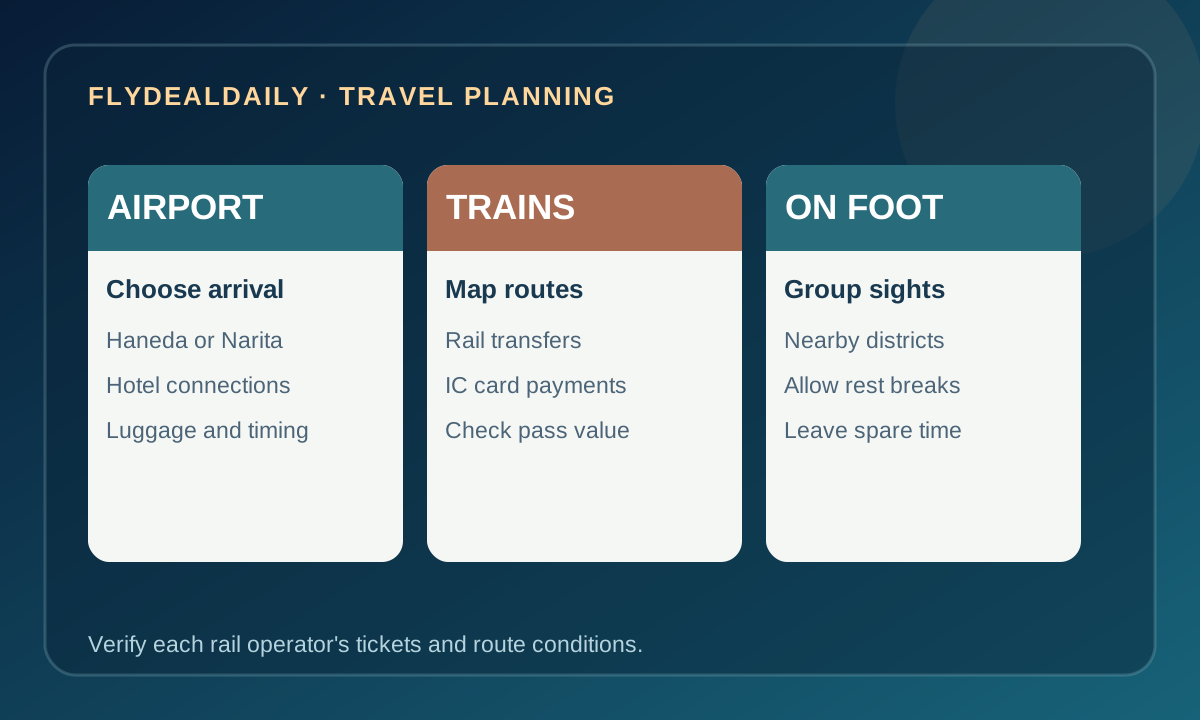
What belongs in your Tokyo budget?
The example earlier in the article is hypothetical. Build your own total from prices for your exact travel dates.
Smart booking order for seven days
- Check live flights and luggage conditions for your dates, then compare Haneda and Narita access.
- Book a centrally connected hotel with a clear cancellation policy.
- Reserve must-do attractions and any premium restaurant with dated policies.
- Choose a day trip after checking the season and transport.
- Keep some time unbooked for neighborhoods, weather and discoveries.
Ready to start? Use the official FlyDealDaily flight search for current fares, compare transit passes, or browse optional Tokyo food tours on Klook ↗. Klook is an affiliate link; specific attractions and available inventory depend on the supplier.
Frequently asked questions
Is seven days in Tokyo too long?
No. A full week allows multiple neighborhoods and an optional day trip without requiring an attraction every hour.
Which Tokyo area is easiest for first-time visitors?
Shinjuku, Ueno/Asakusa and the Tokyo Station/Ginza corridor are useful bases for different priorities. Choose by your transport and evening plans.
Do I need a nationwide Japan Rail Pass?
Do not assume so. For a primarily Tokyo itinerary, compare the actual rail trips and ticket costs before purchasing any long-distance pass.
Can I fit a Wagyu farm visit into a Tokyo afternoon?
No. The verified cattle farm experiences are in Hyogo or Hida, far from central Tokyo. A Wagyu restaurant is the realistic Tokyo-based alternative.
Official sources and further reading
- GO TOKYO — official neighborhood itinerary
- GO TOKYO — Asakusa
- GO TOKYO — Tsukiji Outer Market
- GO TOKYO — Odaiba
- GO TOKYO — visitor attractions
Prepared October 19, 2026. This itinerary is an editorial sample, not a live attraction availability or ticket-pricing service. The cost table is hypothetical planning arithmetic, not a price comparison.