
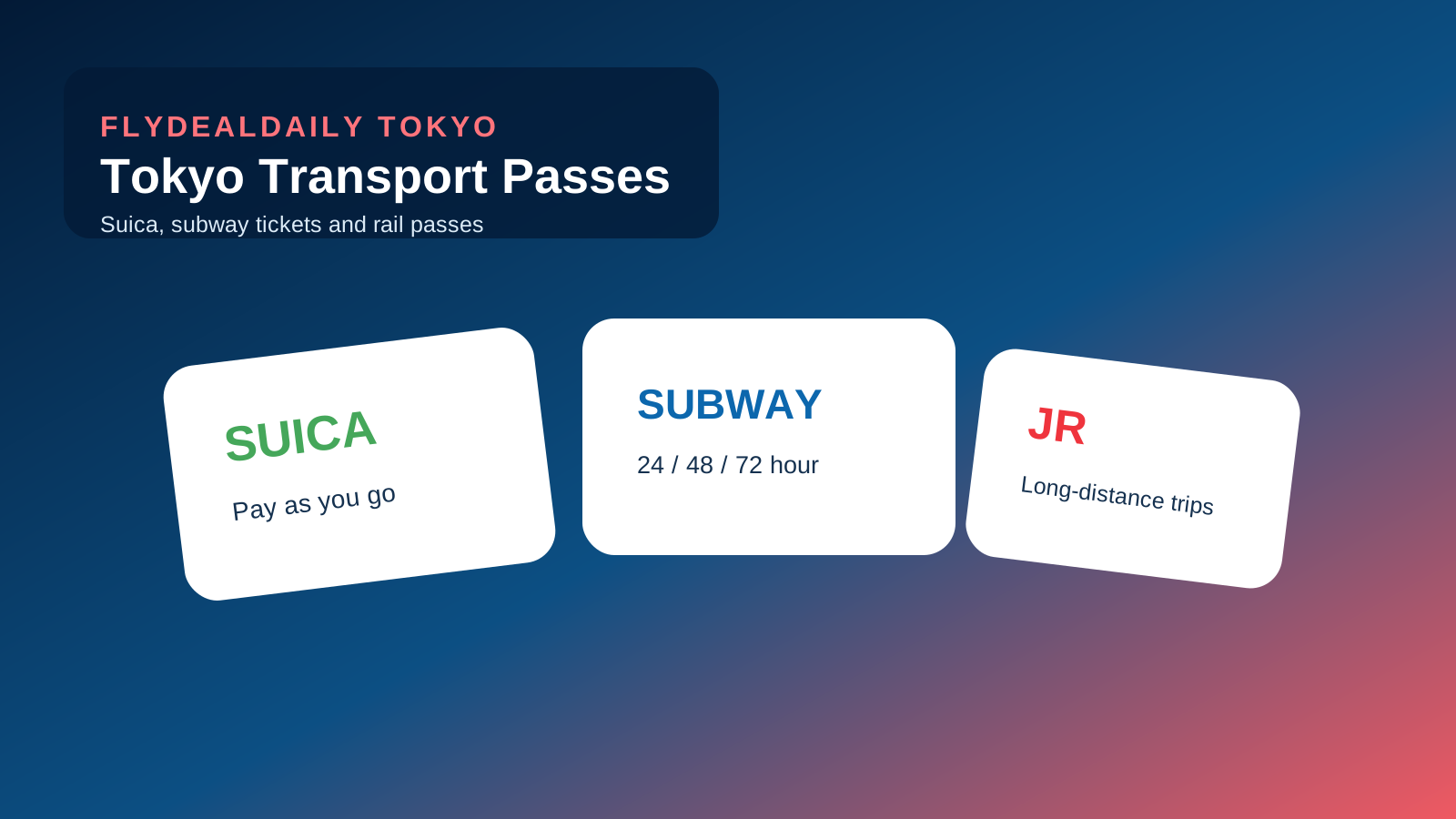
Tokyo transport products are often compared as if they were interchangeable, but they solve different problems. Suica is a payment tool, the Tokyo Subway Ticket is an unlimited subway product for a fixed period, and the nationwide Japan Rail Pass is a long-distance rail product.
Quick answer: most first-time Tokyo visitors should use an IC card for convenience, then add a subway pass only on a ride-heavy day. Consider a nationwide JR Pass only after pricing the long-distance journeys in the full Japan itinerary.
Transport options at a glance
| Product | What it is | Best for | Does not solve |
|---|---|---|---|
| Suica / Welcome Suica | Stored-value IC payment card | Mixed JR, subway, bus and small purchases | No automatic unlimited-travel discount |
| Tokyo Subway Ticket | 24/48/72-hour unlimited Tokyo Metro and Toei ticket | Subway-heavy sightseeing within covered lines | JR trains and most private railways |
| Single tickets | Pay each journey | Very light travel or a one-off route | Convenience when plans change repeatedly |
| JR local day products | Specific JR-area unlimited products | JR-heavy itineraries within the named area | Subway or private lines outside coverage |
| Japan Rail Pass | 7/14/21-day nationwide JR pass | Eligible long-distance rail itinerary after calculation | Cheap Tokyo-only urban transport |
Suica: the default convenience choice
Welcome Suica can be used on many trains, subways and buses in the Tokyo metropolitan area and at compatible shops. It reduces ticket-machine decisions and is especially useful when the best route mixes operators. The important point is that convenience is not the same as unlimited travel: each eligible ride is charged from the stored balance.
Tokyo Subway Ticket: a route-dependent saving
The ticket provides unlimited rides on Tokyo Metro and Toei Subway lines for 24, 48 or 72 hours from activation. It can be good value on a dense subway itinerary, but not when the planned routes rely heavily on JR East, private railways, buses or walking. Map the actual day before buying.
Good subway-pass day
Asakusa, Ueno-area subway access, Ginza, Roppongi and Shinjuku can create several eligible subway trips. A pass may also encourage convenient short rides that you might otherwise walk.
Poor subway-pass day
A loop centered on Shibuya, Harajuku, Shinjuku and Tokyo Station may use JR or walking enough that a subway-only product loses its advantage.
Japan Rail Pass: calculate before buying
The nationwide pass is priced for long-distance travel, not ordinary Tokyo commuting. Official prices and conditions can change, and Nozomi or Mizuho use requires an additional special ticket with a valid pass. Build the itinerary first, price the eligible long-distance trips, then compare the total with the pass.
Avoid a common mistake: do not buy a nationwide JR Pass simply because Japan has excellent trains. A product can be convenient and still cost more than individual tickets.
Decision checklist
- List the exact neighborhoods and day trips.
- Check which operator runs each route.
- Group subway-heavy sights on the same day.
- Use an IC card for mixed-operator flexibility.
- Calculate long-distance rail separately from Tokyo transport.
Sample itinerary calculations
West Tokyo day
A day built around Shinjuku, Harajuku and Shibuya may use JR lines, walking and only a small number of subway rides. An IC card is usually the simplest approach. Buying a subway-only pass can encourage inconvenient routing just to “use the pass.”
Central and eastern subway day
A route through Asakusa, Ginza, Roppongi and Shinjuku can create enough eligible Tokyo Metro and Toei trips for a timed subway ticket to make sense. Calculate with the current official fare and remember that the validity is measured from activation rather than simply by calendar date.
Tokyo plus Kyoto
A nationwide JR Pass should be compared against the actual eligible intercity tickets plus local journeys. A single return between Tokyo and Kyoto does not automatically make the pass economical, especially after price changes. Add every planned long-distance segment and any required supplemental ticket.
Mobile versus physical IC cards
A mobile solution can reduce the need to carry another card, but device, region, payment-card and operating-system support can affect setup. A physical visitor card can be simpler for someone who does not want to change phone settings. Keep enough balance for the route, and understand the refund or expiry rules of the specific card.
Pass mistakes that waste time
- Routing around the city to remain on a covered operator.
- Buying a pass before grouping sights geographically.
- Assuming all subway-looking lines are covered.
- Confusing an IC payment card with an unlimited pass.
- Buying a nationwide product for a city-only trip.
- Ignoring child eligibility and purchase conditions.
The right pass reduces decisions. The wrong pass turns a flexible transport network into a self-imposed restriction.
Frequently asked questions
Is Suica an unlimited travel pass?
No. Suica and Welcome Suica are stored-value IC payment cards. The fare is deducted for each eligible trip.
When does a Tokyo Subway Ticket make sense?
It is most useful on subway-heavy sightseeing days with enough Tokyo Metro and Toei rides to beat pay-as-you-go fares.
Does the Tokyo Subway Ticket cover JR trains?
No. It covers Tokyo Metro and Toei Subway lines, not JR lines such as the Yamanote Line.
Is the nationwide JR Pass necessary for Tokyo only?
No. A nationwide JR Pass is designed for substantial eligible long-distance rail travel and is usually unnecessary for a Tokyo-only visit.
Official sources and further reading
- JR East Welcome Suica
- Tokyo Subway Ticket official site
- Japan Rail Pass prices
- Japan Rail Pass conditions
Prices, schedules, admission rules and product terms change. Recheck the linked official source before booking or traveling.