
Japanese Wagyu is an experience many visitors plan an entire meal around. Yet Wagyu, A5 and Kobe beef are not interchangeable labels, and the farms where these cattle are raised are often hours away from Tokyo. Here is a practical way to choose a memorable steak dinner and, if your wider itinerary allows, meet cattle in the countryside.
Decision shortcut: For a special Kobe beef teppanyaki meal in central Tokyo, investigate Kobe Beef Steak Ishida in Ginza or the officially registered Kobe Beef 511 in Akasaka. For A5 Japanese Black Wagyu rather than a guaranteed Kobe brand, investigate Ginza Steak. For a farm experience, plan an entirely separate regional excursion to Hyogo or Hida.
What is the difference between Wagyu, A5 and Kobe beef?
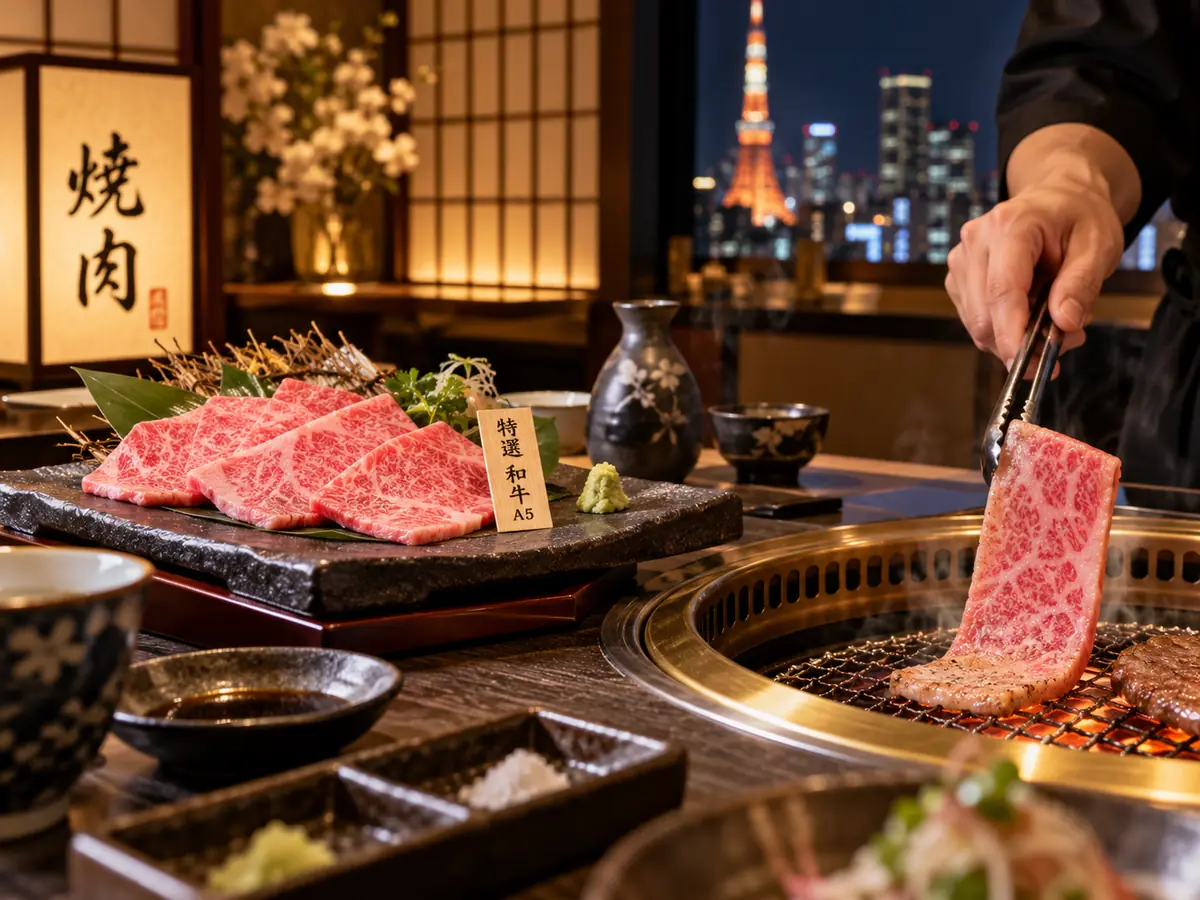
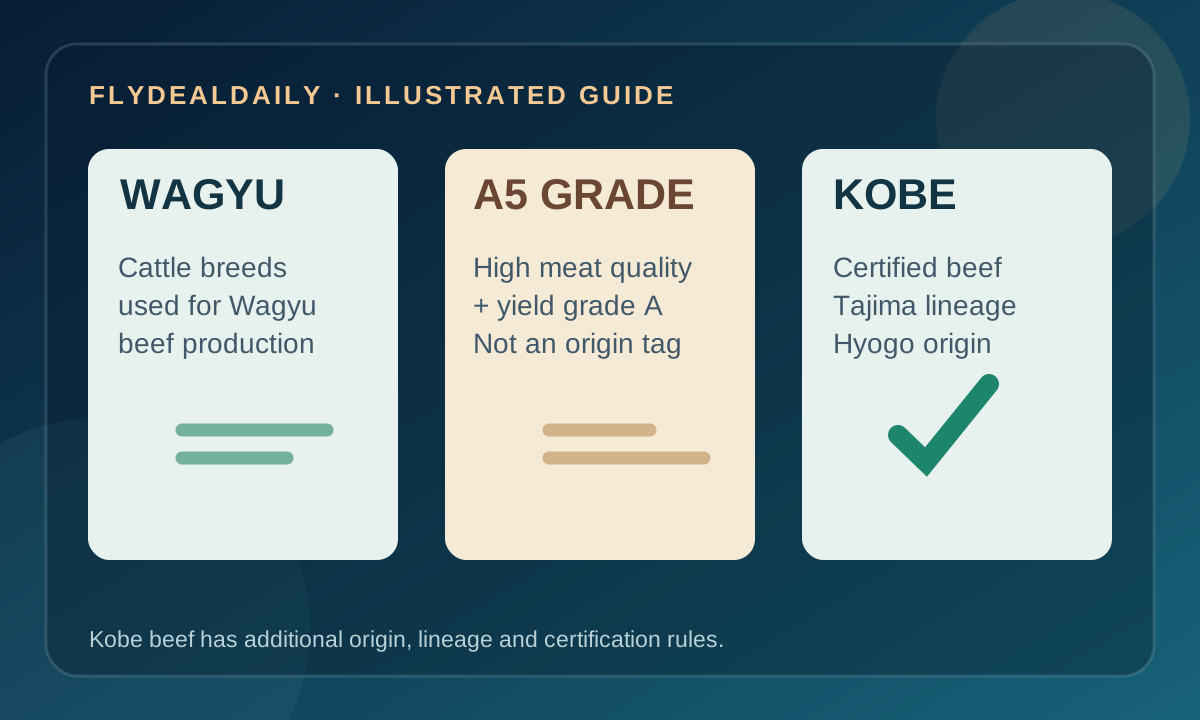
Wagyu is a Japanese term used for designated cattle breeds, notably Japanese Black. A5 is a grading combination: “A” relates to carcass yield and “5” to meat quality; it is not a certificate of Kobe origin. Kobe beef has geographic, lineage, production and quality requirements set by the Kobe Beef Marketing & Distribution Promotion Association. The official definition requires qualifying Tajima-lineage beef from Hyogo Prefecture and a marbling score of at least 6, among other conditions. Kobe beef need not simply be labeled “A5,” and not every A5 steak is Kobe beef.
The association publishes an official definition and grading rules and a Tokyo registered-store directory. Authentic Kobe beef can also have a certificate and a traceable ten-digit cattle ID. Ask the restaurant for current certification or traceability information rather than relying on generic words like “premium wagyu.”
| Label | What it actually tells you | Before booking |
|---|---|---|
| Japanese Wagyu | Japanese cattle-breed category | Ask about breed, origin and cut |
| A5 Wagyu | Yield A and meat-quality grade 5 | Does not automatically mean Kobe |
| Certified Kobe beef | Meets specific Tajima / Hyogo certification requirements | Check registration and certification |
Three Tokyo steak options worth comparing
1. Kobe Beef Steak Ishida — Ginza teppanyaki
Area: Ginza 7-chome, HULIC &New GINZA 7, 7F. This upscale teppanyaki restaurant lists Kobe beef, selected premium Kobe beef and other Hyogo A5 Japanese Black Wagyu as separate dinner categories. The chef cooks at the iron counter; booking is sensible for a fixed-date special dinner. The official restaurant information lists lunch 11:30–15:00, dinner 17:00–22:00 and Sunday closure. Confirm current hours, seating and extra charges before paying.
Official Ishida menus → · Official Ishida reservation page →
2. Kobe Beef 511 — Akasaka
Area: Akasaka 4-3-28, Dear Plaza Akasaka B1F. Kobe Beef 511 appears in the official Kobe Beef registered-store directory (registration No. 550). The restaurant specializes in premium Kobe beef and multi-course dining. That verified registration is a stronger starting point than a random “A5” sign, but visitors should still check the exact meat, menu price, cancellation policy and certificate for their order.
Kobe Beef 511 official website → · Official registered Kobe beef restaurants in Tokyo →
3. Ginza Steak — A5 Wagyu tasting option
Area: Ginza and Shimbashi, with several locations carrying similar names. Ginza Steak’s teppanyaki concept centers on Japanese Black A5 Wagyu served in course formats with additional steak servings under specific time and menu rules. It is a potentially interesting choice for comparing leaner and highly marbled cuts, but do not call every A5 cut Kobe beef. Confirm the precise branch and the applicable menu before reserving.
For neighborhoods and travel time around a dinner, read our Tokyo restaurant area guide.
Can tourists visit real Wagyu cattle farms in Japan?
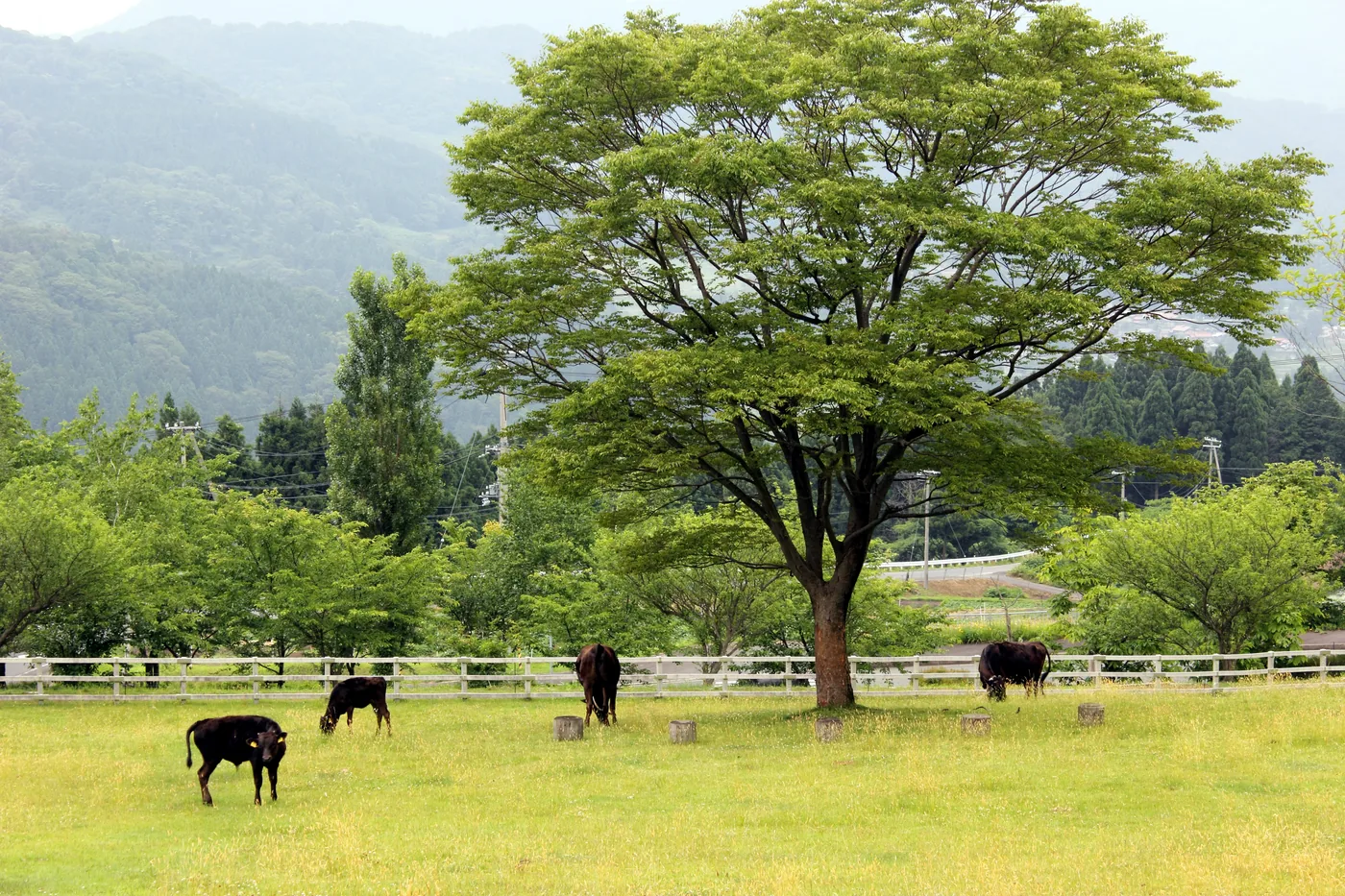
Yes, but most production farms are private working agricultural facilities. Animal-health rules and limited staffing mean spontaneous visits are often impossible. The following are operator-verified visitor experiences, not farms in central Tokyo. We do not describe them as Tokyo day trips.
Tajima Pasture Park — Shinonsen, Hyogo Prefecture
The prefectural Tajima Pasture Park was created partly to introduce visitors to the Tajima cattle lineage associated with Kobe beef. It has a cattle barn, pasture viewing, a Tajima beef museum and other agricultural facilities. According to its official visitor pages, park admission and parking are free, general opening hours are 9:00–17:00, and the regular closing day is Thursday unless a holiday affects the schedule. Direct animal encounters and grazing are weather- and husbandry-dependent; seasonal mountain grazing normally occurs from June to October.
Planning reality: this is in northern Hyogo near the Yumura Onsen area, not next to Kobe or Tokyo stations. Treat it as a regional overnight itinerary unless you have researched a suitable driving route and transport.
Official Tajima Pasture Park visitor information → · Animal access and seasonal guidance →
Toyooka Tajima cattle walk — prebooked small farm visit
The official Toyooka tourism website describes a guided-by-farmer experience at Kounotori Fudo Central Farm, 138 Miyai, Toyooka. Guests see the cattle barn, talk with the farmer, help feed cattle and walk roughly one kilometer with a Tajima cow. The published experience takes about an hour, with ¥3,300 for one person or ¥5,500 per group of two to five, tax included, as listed in October 2026.
Advance booking is required at least 14 days ahead. The operator says people who have spent fewer than seven days in Japan after entry cannot participate, an important biosecurity limitation for international arrivals. Tours can also be canceled for animal-health reasons. No English-language guide is promised, so confirm language before paying.
Toyooka official farm visit, rules and booking →
Hida-Furukawa E-bike tour — Wagyu farm stop near Takayama
Hida Local Experience operates a roughly 3.5-hour private countryside e-bike tour from Hida-Furukawa, including a stop at a local Hida cattle farm. The operator lists a ¥19,800 per person tour for two to four people, normally May–November except Thursdays; check availability, cycling eligibility and weather cancellation. Hida-Furukawa is reached from Takayama, not from a Tokyo suburban station.
This is a countryside cycling excursion with a farm stop, not a premium Kobe beef dinner and not proof that the animals are certified Kobe cattle.
Official Hida countryside bike and farm tour →
How to make the most of a Wagyu-focused Japan itinerary
| Travel style | Best approach | Booking priority |
|---|---|---|
| Tokyo-only, 3–7 days | Reserve a genuine Kobe or A5 Wagyu restaurant in Ginza/Akasaka | Steak menu, certificate, cancellation terms |
| Tokyo + Takayama/Hida | Explore Hida countryside and arrange a farm visit | Bike tour and regional transport |
| Hyogo / Kinosaki / Yumura area | Visit Toyooka or Tajima Pasture Park | 14-day advance farm deadline and restrictions |
A Tokyo dinner and a Hyogo farm should not be sold as a single easy city excursion. For first-time visitors, the simplest Wagyu itinerary is a normal sightseeing day followed by a confirmed evening steak reservation. Farm travel makes more sense after building a longer itinerary into western or central Japan. See our seven-day Tokyo itinerary for the city portion.
Which Wagyu experience fits your trip?
Choose by verified product details rather than the word “premium” alone.
What about affiliate bookings?
The restaurant and farm links above lead directly to official operators. FlyDealDaily has no verified commission arrangement for those specific reservations. We may earn a commission on qualifying bookings from the broader Klook Tokyo food tours catalogue below, but that link does not guarantee these particular Wagyu restaurants or farms appear there.
Explore other Tokyo food experiences: Browse Tokyo food tours on Klook ↗ (affiliate link). Compare the live itinerary and inclusions before purchase.
Frequently asked questions
Is A5 Wagyu always Kobe beef?
No. A5 is a grading description. Genuine Kobe beef must meet separate Tajima lineage, Hyogo origin and certification requirements.
Can I visit a Kobe beef farm as a day trip from Tokyo?
Not realistically as a simple Tokyo city outing. The verified Tajima cattle visitor facilities are in Hyogo, far from Tokyo. Plan a separate regional overnight excursion or guided program.
Are Wagyu farm visits available every day?
No. Private farms may have biosecurity rules, advance reservation requirements, seasonal restrictions or closures. Toyooka specifically requires booking at least 14 days ahead.
How do I check if a restaurant serves authentic Kobe beef?
Look for the association’s registered-store directory and ask about the current Kobe Beef Certificate of Authenticity or a traceable cattle ID for the specific meat.
Official sources and further reading
- Kobe Beef Association — definition and classification
- Official Tokyo Kobe beef registered restaurant list
- Ishida Ginza — official menu
- Tajima Pasture Park — official opening and admission
- Toyooka Tourism — prebooked Tajima cow experience
- Hida Local Experience — cattle-farm bicycle excursion
Operator websites and official tourism references checked October 19, 2026. Prices, biosecurity policies, branch hours and availability may change. Farm visits and restaurant bookings are direct links unless explicitly marked as affiliate.